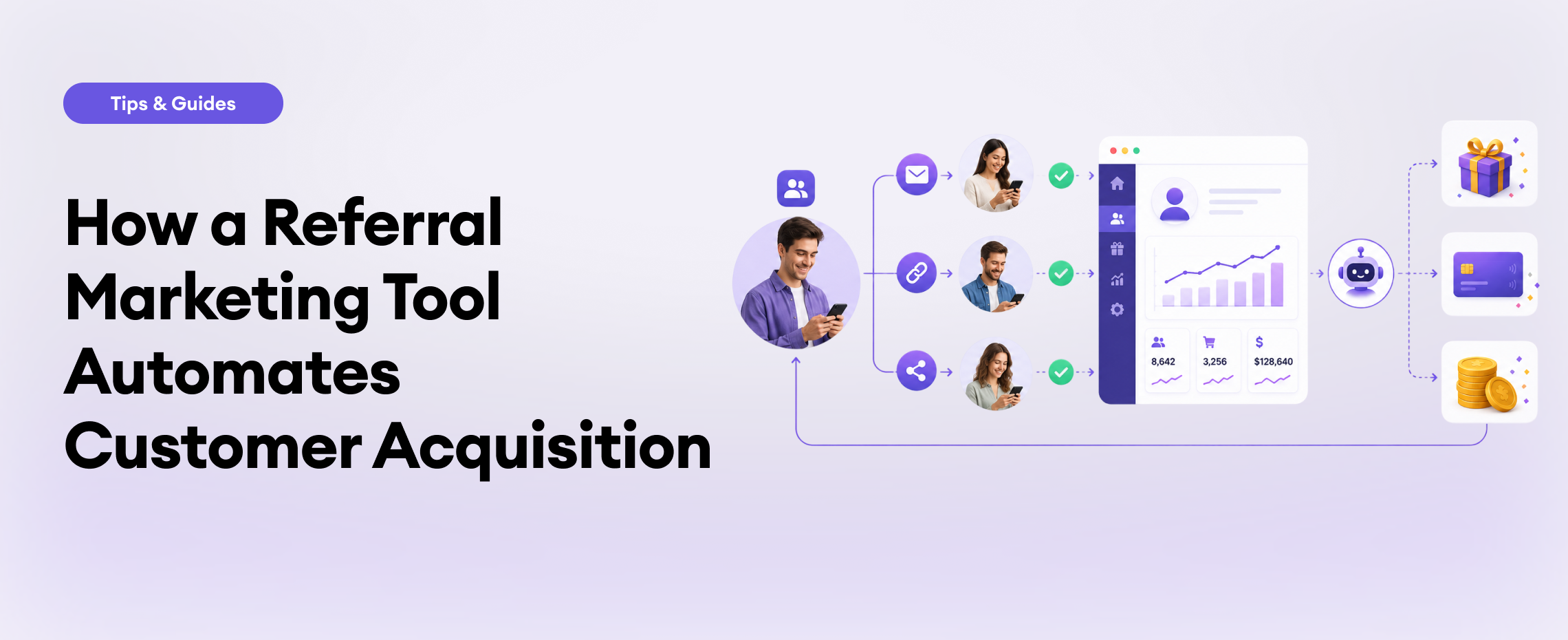
How a referral marketing tool automates customer acquisition
A modern referral marketing tool automates the entire acquisition funnel – from sharing to reward distribution. Let’s break it down step by step.
1. Automated referral tracking
At the core of any referral system is tracking. A referral marketing tool generates unique identifiers for each user. When someone clicks a link or enters a code:
- The system records the source user
- It tracks the journey across sessions and devices
- It attributes the final conversion correctly
This eliminates manual tracking and ensures accurate attribution, even in complex customer journeys.
2. Seamless sharing across channels
To maximize participation, referral tools are designed to make sharing as seamless as possible. Instead of requiring any manual setup or technical effort, users can easily spread referral links across multiple channels such as email, social media, messaging apps, or even embedded website widgets.
In more advanced systems, sharing can be further simplified through integrations with mobile contact lists or one-click sharing options that instantly generate and send invites. By removing friction from the sharing process, businesses are able to significantly increase participation rates and drive more referrals without adding extra marketing spend.
3. Automated reward distribution
One of the most important automation features is reward fulfillment. Instead of manually verifying referrals and issuing incentives, the tool automatically:
- Confirms eligible conversions
- Applies predefined rules (e.g., “reward after first purchase”)
- Issues rewards instantly or on a scheduled basis
Rewards can include cash payouts, account credits, discounts or coupons, tier-based incentives, etc. This automation saves significant operational time and reduces human error.
4. Real-time analytics and performance tracking
A referral marketing tool provides detailed analytics dashboards that help businesses optimize their programs. Typical metrics include number of referrals generated per user, conversion rates from referral traffic, cost per acquisition via referrals, top-performing advocates, and revenue generated from referral users
With this data, companies can identify what’s working and continuously improve their incentive structures.
5. Fraud detection and prevention
As referral programs scale, they often become more vulnerable to abuse, which is why advanced referral marketing tools place a strong emphasis on fraud prevention. Instead of relying on manual checks, these systems use automated mechanisms such as device fingerprinting to identify repeat users, IP tracking to monitor unusual activity patterns, duplicate account detection to prevent users from claiming rewards multiple times, and behavioral analysis to flag suspicious actions.
Together, these safeguards work in the background to ensure that only legitimate referrals are rewarded. This helps maintain the integrity of the program and protects overall return on investment by preventing fraudulent activity from inflating acquisition numbers or reward payouts.
6. Personalization and segmentation
Modern systems go beyond basic referral tracking. They allow businesses to segment users and personalize campaigns.
For example:
- High-value customers may receive higher rewards
- New users may get simplified referral instructions
- Regional campaigns may offer localized incentives
This ensures that referral programs align with broader marketing strategies.