





Take your app to the next level with Affise MMP (Mobile Measurement Partner)
Join Now ⚡
Combining Marketing Automation and Affiliate Marketing in E-commerce Combining Marketing Automation and Affiliate Marketing in E-commerce

  • Blog
  • Tips & Guides
  • Combining Marketing Automation and Affiliate Marketing in E-commerce

Combining Marketing Automation and Affiliate Marketing in E-commerce

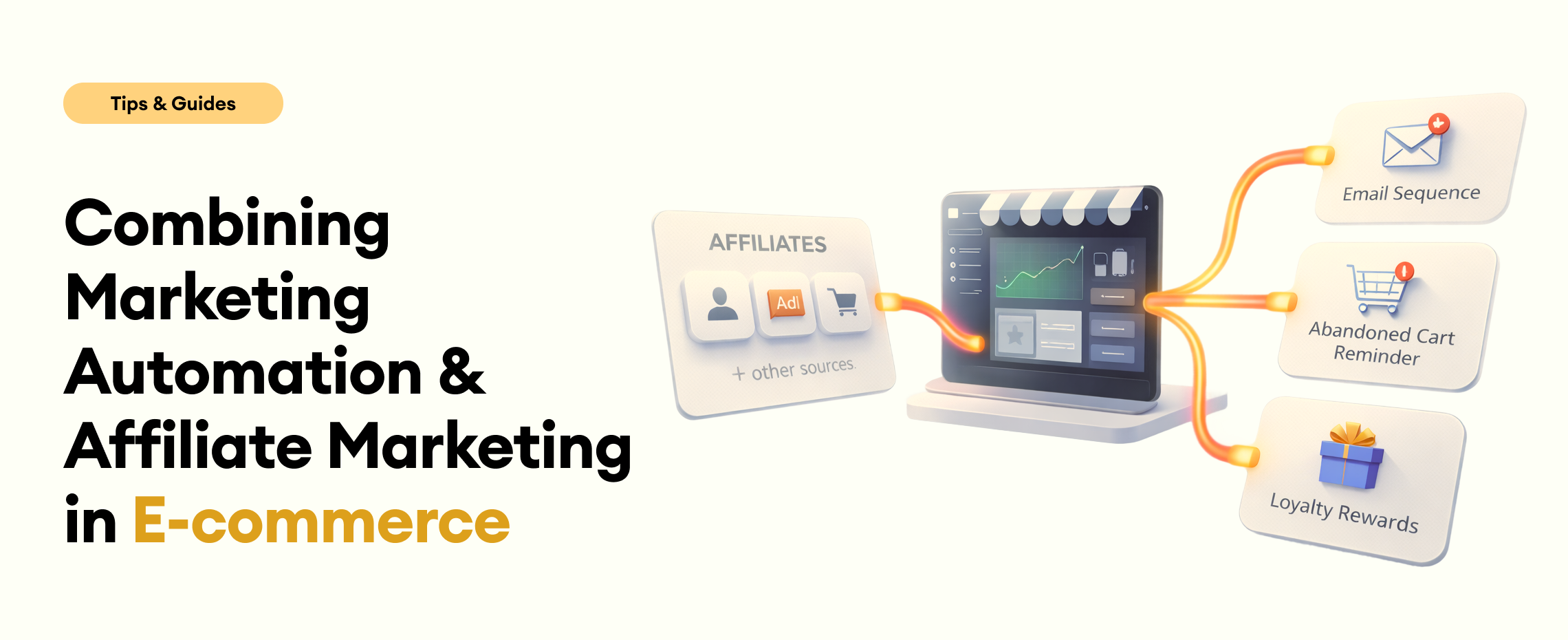
E-commerce brands today operate in a highly competitive environment where customer acquisition costs continue to rise and retention has become just as important as conversion. Affiliate marketing and automation are often managed separately, handled by different teams with different goals. However, when these two strategies are connected properly, they create a far more powerful growth system.

Affiliate marketing brings traffic. Automation converts, nurtures, and retains that traffic. Together, they allow ecommerce businesses to move beyond short-term revenue spikes and build long-term profitability.

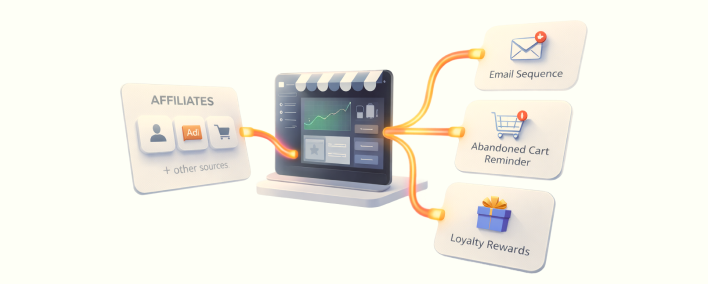
This is where marketing automation for ecommerce becomes especially valuable. It connects traffic sources, behavioral data, and post-purchase engagement into one cohesive structure.

Why affiliate marketing needs automation

Affiliate marketing is traditionally focused on acquisition metrics. Brands evaluate partners based on clicks, conversions, and cost per acquisition. While those metrics are important, they only tell part of the story.

Not all affiliate traffic has the same long-term value. Some partners may drive customers who purchase once and never return. Others may send highly aligned audiences who become repeat buyers and loyal advocates. Without automation and proper segmentation, e-commerce brands cannot see these differences clearly. They optimize for volume instead of profitability.

When automation is layered on top of affiliate campaigns, every visitor can enter a structured journey that includes personalized messaging, behavioral tracking, and retention-focused communication. Instead of relying solely on the first purchase, brands can influence what happens after it.

The role of marketing automation in e-commerce growth

Marketing automation for e-commerce refers to the use of technology to send personalized messages and trigger campaigns based on customer behavior, traffic source, and purchase history.

Rather than sending the same emails to every subscriber, automation systems respond to actions. They can trigger welcome sequences when a new visitor signs up, follow up when someone abandons a cart, and recommend complementary products after a purchase.

When affiliate traffic enters your store, automation ensures that the experience does not end if the visitor leaves without buying. It also ensures that customers who do convert are guided toward repeat purchases. In this sense, automation increases the true return on affiliate investment.

How marketing automation enhances customer retention

While affiliate marketing excels at driving initial traffic, retention is where true profitability is achieved. Marketing automation for ecommerce enables brands to nurture relationships through multiple touchpoints:

  1. Post-purchase sequences: automatically send order confirmations, thank-you messages, and product usage tips to ensure satisfaction and encourage repeat purchases.
  2. Loyalty programs: segment high-value traffic and invite them to exclusive programs that reward repeat buying.
  3. Re-engagement campaigns: trigger reminders for inactive customers, offering discounts or highlighting products related to their previous purchases.

By connecting the dots between affiliate acquisition and automated retention, brands transform one-time buyers into lifetime customers.

Leveraging data for smarter affiliate strategies

A key advantage of integrating automation with affiliate marketing is the ability to collect and analyze detailed data. E-commerce brands can monitor which affiliates bring high-value customers, which messaging converts best, and which behaviors predict repeat purchases.

By connecting affiliate identifiers, website analytics, and CRM data, marketing automation for e-commerce provides actionable insights. Brands can then optimize affiliate commissions based not just on volume but on the quality of traffic and long-term customer value.

For example, affiliates driving highly engaged customers may receive higher rewards, encouraging them to continue sending valuable traffic. At the same time, affiliates generating low-retention traffic can be coached or replaced.

Common pitfalls to avoid

When combining affiliate marketing with automation, certain strategic mistakes can limit performance and reduce long-term profitability.

  1. Treating affiliate traffic like any other traffic source: without proper segmentation, personalization becomes generic. As a result, engagement drops and conversion rates decline.
  2. Focusing only on acquisition metrics: measuring affiliates solely by first-purchase revenue ignores retention and lifetime value. Partners should be evaluated based on long-term profitability, not just initial conversions.
  3. Neglecting clean data integration: if affiliate identifiers are not accurately passed into your CRM and automation systems, segmentation becomes unreliable and lifetime value analysis loses accuracy.

Affiliate marketing brings customers to your store. Automation determines what happens next. When these systems operate separately, growth remains limited by acquisition costs. When they operate together, ecommerce brands gain visibility into customer quality, improve retention rates, and optimize commission structures based on real performance data.

The true advantage of marketing automation for e-commerce is not simply sending emails automatically. It is creating a connected ecosystem where acquisition, personalization, retention, and affiliate optimization reinforce each other.

In an increasingly competitive e-commerce landscape, that level of integration is no longer optional. It is a requirement for scalable and sustainable growth.

Frequently Asked Questions

1. Can marketing automation help identify high-quality affiliates?

Yes. By connecting affiliate identifiers with CRM and behavioral data, brands can analyze which partners bring customers with high retention rates and strong lifetime value. This enables smarter commission models and better allocation of marketing budgets.

2. What are the biggest challenges when combining affiliate marketing with automation?

Common challenges include poor data integration, lack of traffic segmentation, and overreliance on acquisition metrics. Without accurate tracking and proper CRM setup, it becomes difficult to measure customer lifetime value and optimize affiliate performance effectively.

3. Is marketing automation for ecommerce only useful for large brands?

No. While enterprise-level brands often have more complex systems, small and mid-sized ecommerce businesses can also benefit significantly. Even simple automated flows can dramatically improve retention and overall profitability.

Share this article
Daria Mamchenkova

Written by

Daria is a dedicated Content Writer driven by her passion for crafting crystal-clear articles. Her passion lies in crafting articles that unravel complex concepts and make them easily digestible for readers. She is enthusiastic about acquiring new skills. Daria loves to explore the world of affiliate marketing, helping businesses and readers understand the intricacies of this industry.


Sign up to receive our newsletter

Stay on top of the competition. Let us keep you updated with news, insights, and more

email envelope