







Take your app to the next level with Affise MMP (Mobile Measurement Partner)
Join Now ⚡
Impression Tracking | Unlock View-Through Attribution in Affise Impression Tracking | Unlock View-Through Attribution in Affise

Updates — 12 Aug 2026

Affise Enables Impressions Tracking

  • Blog
  • Updates
  • Get Accurate Insights on User Behaviour with View-through Attribution

Get Accurate Insights on User Behaviour with View-through Attribution

Although click-through attribution is still the most widely-used model of conversion attribution in online advertising, many advertisers do not simply rely on clicks. Instead, they’re searching for a more comprehensive approach of analyzing user behaviour before he completes a target action. In this case, impressions tracking acts as a powerful metric which allows marketers to measure their ad performance in a more accurate way.

What is VTA (view-through attribution)?

View-through attribution (VTA), also known as ‘impressions tracking’, is one of the mobile advertising attribution models. In case of view-through attribution a conversion happens when a user just sees a display of the product’s ad and then makes the target action (e.g. install the app or purchase) by going directly to the website or doing an organic search separately within the specific lookback window.

Let’s say you’re selling training shoes and you’ve developed an ad which is shown up to a user during some gaming session. The user sees an ad and decides not to interrupt the ongoing game by ultimately clicking the ad. Instead, he remembers the product and goes on searching for it online some time later. If a user sees an ad for the training shoes today, and then buys them a year from now, you’d hardly attribute such a purchase to the display of the ad made a year ago. But if the same user makes a purchase just within a couple of hours, we could reasonably say that the ad had an impact on his purchasing decision. In this case we’re talking about the view-through conversions, i.e. view-through attribution model.

What makes view-through attribution so useful?

Simply put, if a user views an ad and for some reason doesn’t click on it further, the view-through attribution allows you:

  • to credit a particular ad campaign with an eventual conversion;
  • to provide advertisers with more visibility into the ads and channels that are driving conversions;
  • to understand user behaviour more clearly, i.e. analyze what happens before the purchase or install;
  • to work with large and representative advertisers and hence to increase the revenue.

How to start using view-through attribution in Affise?

If you come up with the decision to start using view-through attribution, all you need is to follow a few easy steps to launch the process:

1. Enable ‘Allow impressions’ setting

To start tracking conversions based on the impression the very first thing you’ll need to do is to find ‘Allow impressions’ setting within the ‘Tracking’ tab at the Offer’s edit page and enable it:

2. Fill in ‘Impressions destination URL’ field

Add your advertiser’s impressions link into the ‘Impressions destination URL’ field and append an {aimp_id} macro to it:

 Now Affise is able to pass the impressions data to your advertiser’s system.

3. Set up a specific attribution window

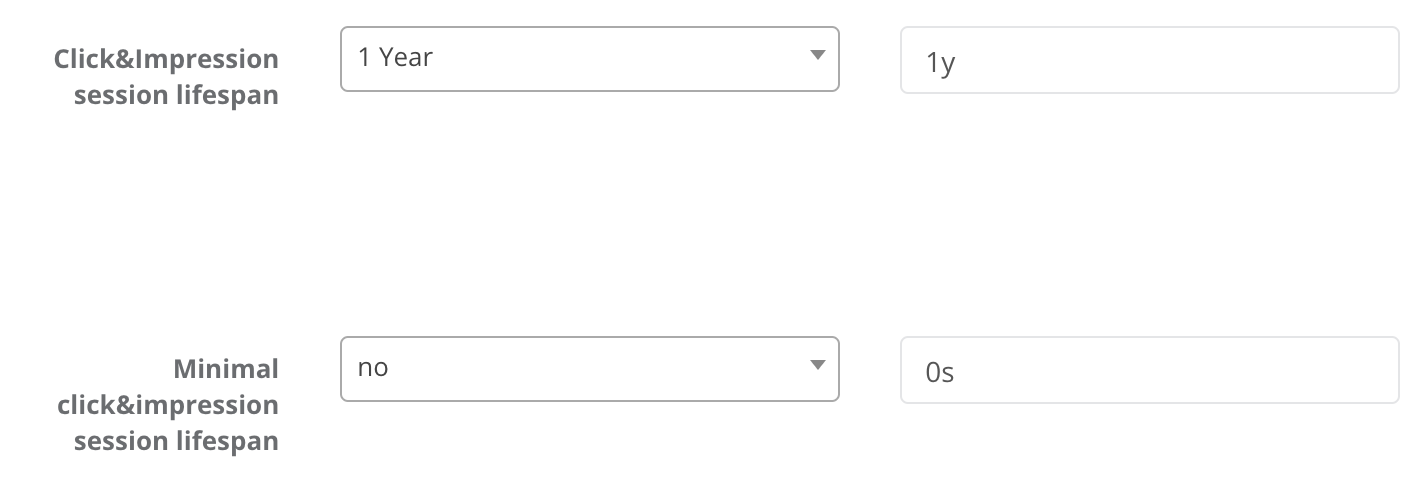
VTA’s attribution windows are usually short: typically just one day or seven days at most. Use ‘Click & Impression session lifespan’ and ‘Minimal click & impression session lifespan’ to:

  • set a period a conversion is allowed for an impression, i.e. impressions attribution window;
  • set a period for which an impression conversion will not be accepted.

4. Start tracking conversions based on the impressions

Your advertiser has now successfully received all the needed information to start impressions tracking. What’s next?

Once an impression is recorded in Affise, the system generates a unique impression ID which is further sent to your advertiser via the {aimp_id} macro using the Impressions Destination URL. When a user completes a target action, your Advertiser records a conversion and this data is sent to Affise via Affise postback URL.

Upon receiving the postback URL with the conversion information along with the Impression ID for which the conversion was recorded, Affise can easily match the information on the received conversion with the impression ID earlier recorded in Affise system and register the conversion based on the impression for a particular offer and affiliate.

Can I see the data in statistics?

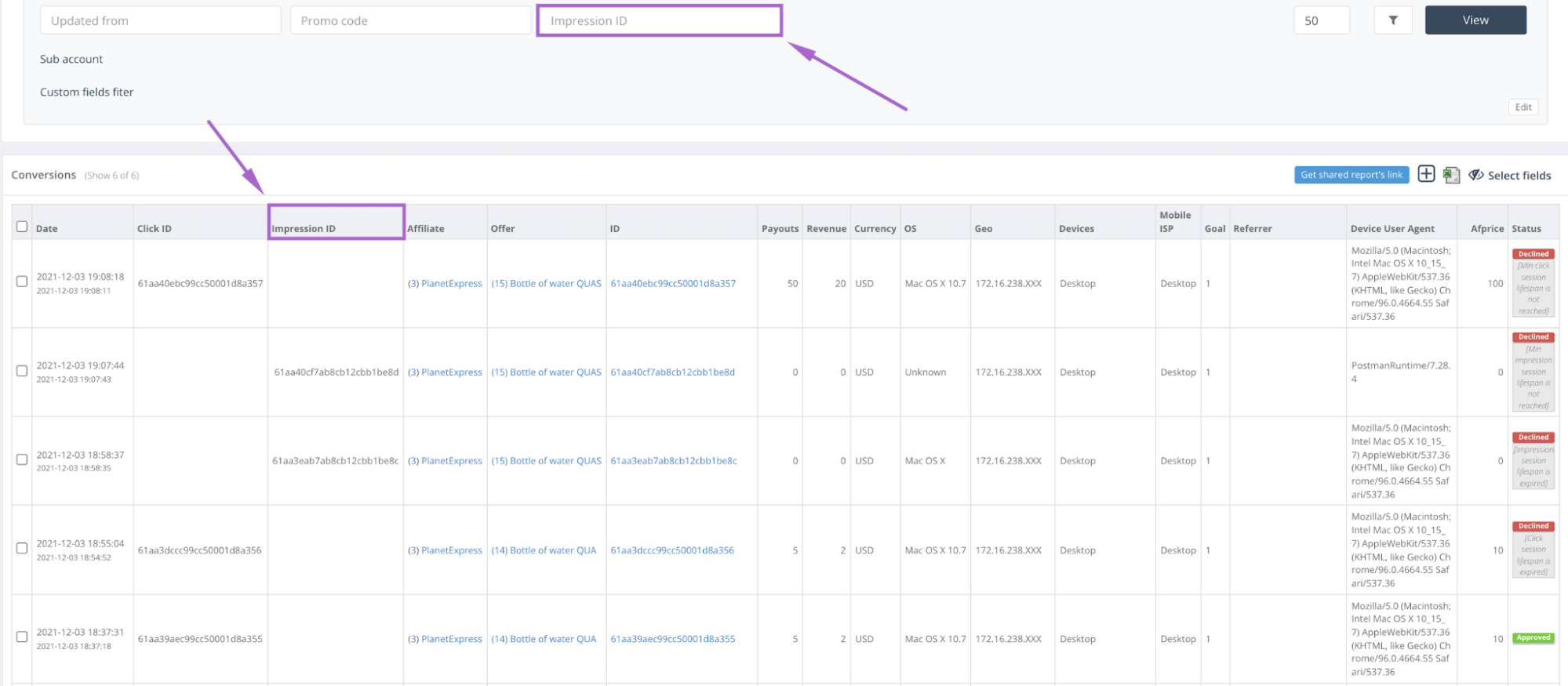
The short answer is ‘yes’. All the data about the conversions recorded based on the impressions can be easily found and get filtered by impression ID at Affise statistics conversions list page for your further analysis:

Moreover, you can use Affise export and ‘shared report link’ functionalities to share this information with your partners or any other third-party service.

To sum it up, both attribution models (click-through and view-through) can benefit you well in the specific situation. It falls on the marketers to understand how their business workflow and goals will help them to define which model to use. On the other hand, though CTA and VTA are considered to be two separate attribution models, obviously, they are just different sides of the same coin: their alongside usage can be super helpful to understand user behaviour before he makes a purchase or install decision in a more accurate way and to have a full representation of the campaign. 

Frequently Asked Questions

1. What is View-Through Attribution (VTA), and how does it differ from click-through attribution?

View-through attribution, also known as impressions tracking, is a mobile advertising attribution model that credits a conversion to an ad impression rather than a direct click. While click-through attribution requires a user to click an ad before making a purchase or downloading an app, VTA accounts for users who view a display ad, choose not to interrupt their current activity, and subsequently complete the target action within a specified lookback window. This model provides advertisers with greater visibility into how ad exposures influence consumer behavior across different marketing touchpoints. To further deepen your industry knowledge on performance tracking strategies, feel free to explore the courses available at Affise Academy.

2. What are the key benefits of using impression tracking for affiliate and performance campaigns?

Impression tracking allows performance marketers to gain a complete and accurate picture of user behavior prior to a conversion occurring. By measuring view-through conversions, advertisers can evaluate the true impact of display and video ads that drive passive engagement without immediate clicks. Additionally, it enables networks and brands to properly attribute multi-touch conversion paths, share more holistic campaign reports, and partner with high-volume advertisers to unlock new revenue streams. If you would like to explore real-world examples of performance scaling, check out these inspiring affiliate marketing success stories.

3. How do you configure and track view-through attribution within the Affise platform?

Setting up VTA in Affise involves enabling the “Allow impressions” toggle in the offer tracking settings and adding an impression link with the {aimp_id} macro to the destination URL. Marketers then define specific attribution windows, such as a 1-day or 7-day session lifespan, to establish the valid timeframe for impression conversions. When a conversion occurs, the advertiser’s system sends a postback with the unique impression ID back to Affise to automatically match and record the event. To keep up with future product releases and technical enhancements like this, you can browse through the Affise blog.

Employ Affise impressions tracking for more accurate attribution. Not a user yet? Start your free trial today.

This article is reffered with:

Share this article
Affise Academy

Written by

Affise Academy

Affise is a partner marketing platform for brands, advertisers and agencies to scale via all possible performance marketing channels. Synergy of technology and our long standing experience lets you expand your partnerships, automate every step of the campaign lifecycle and make data-driven decisions.

See all articles →


Sign up to receive our newsletter

Stay on top of the competition. Let us keep you updated with news, insights, and more

email envelope